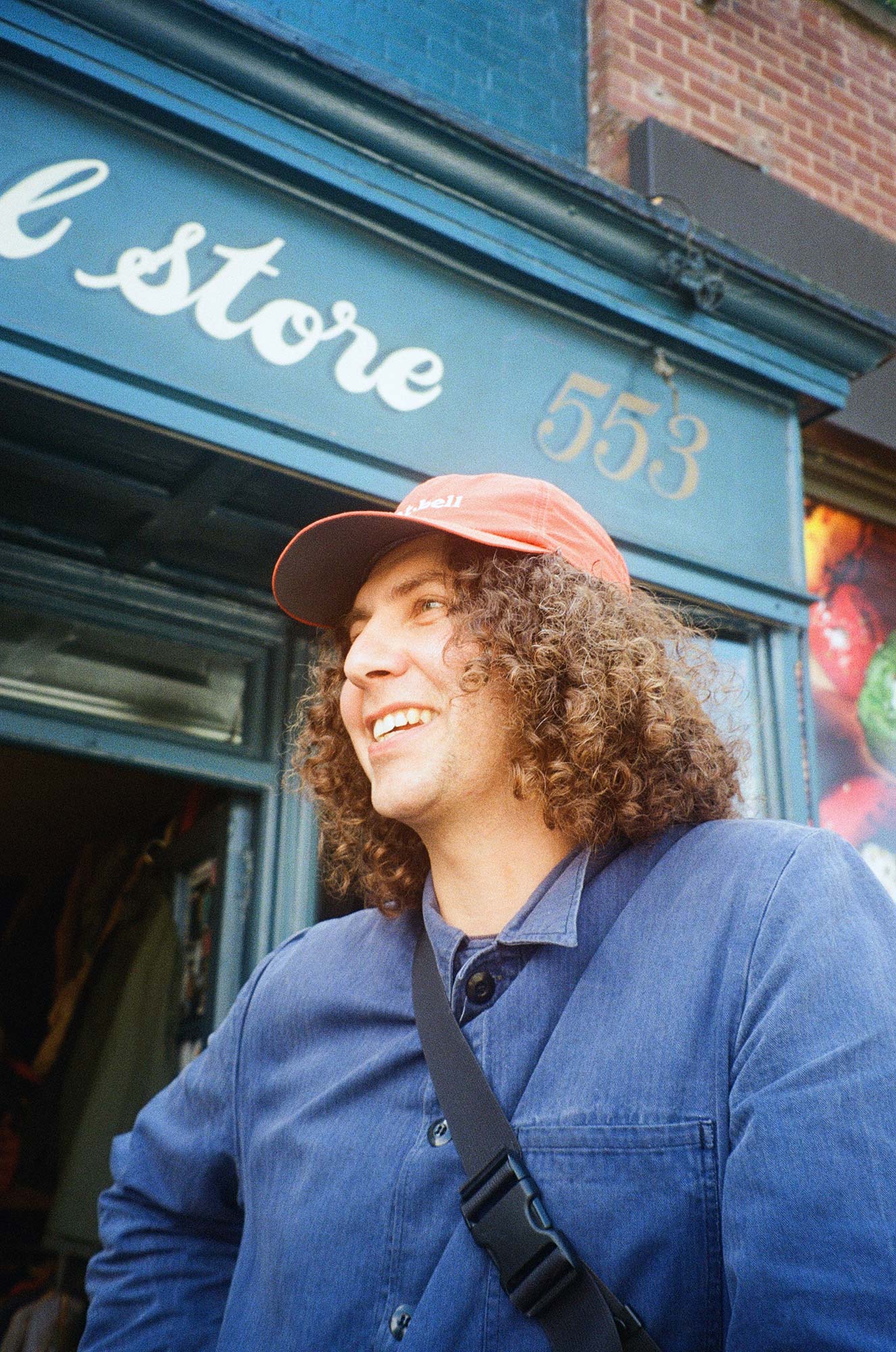
Our interview with Rag Parade founder Jojo Elgarice, delving deep on his love of the hunt and why classic functional clothing never fades away…
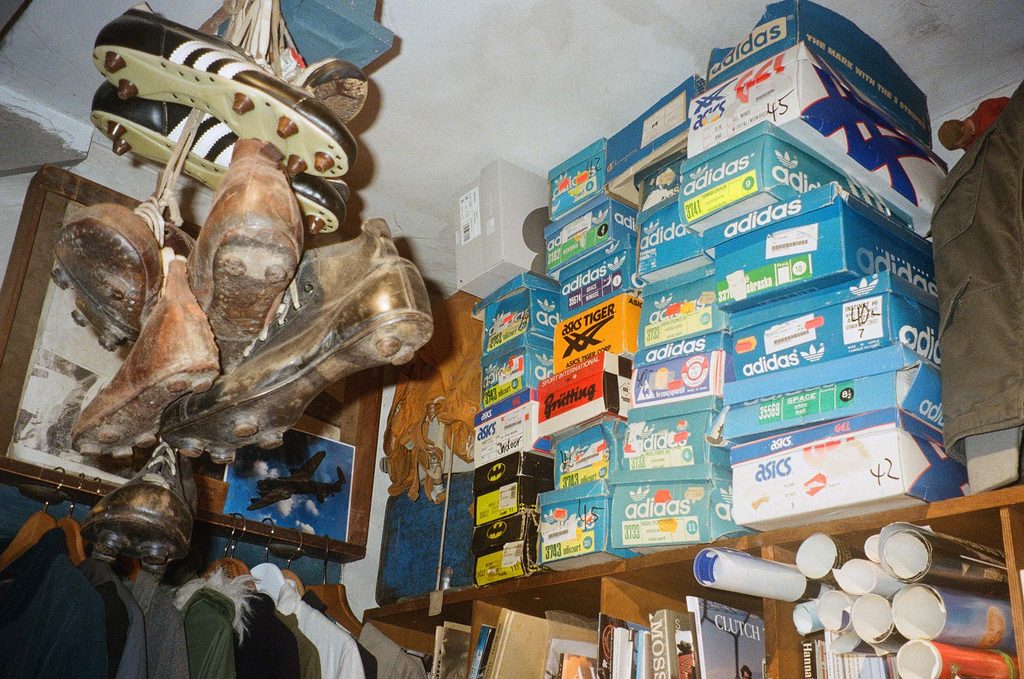
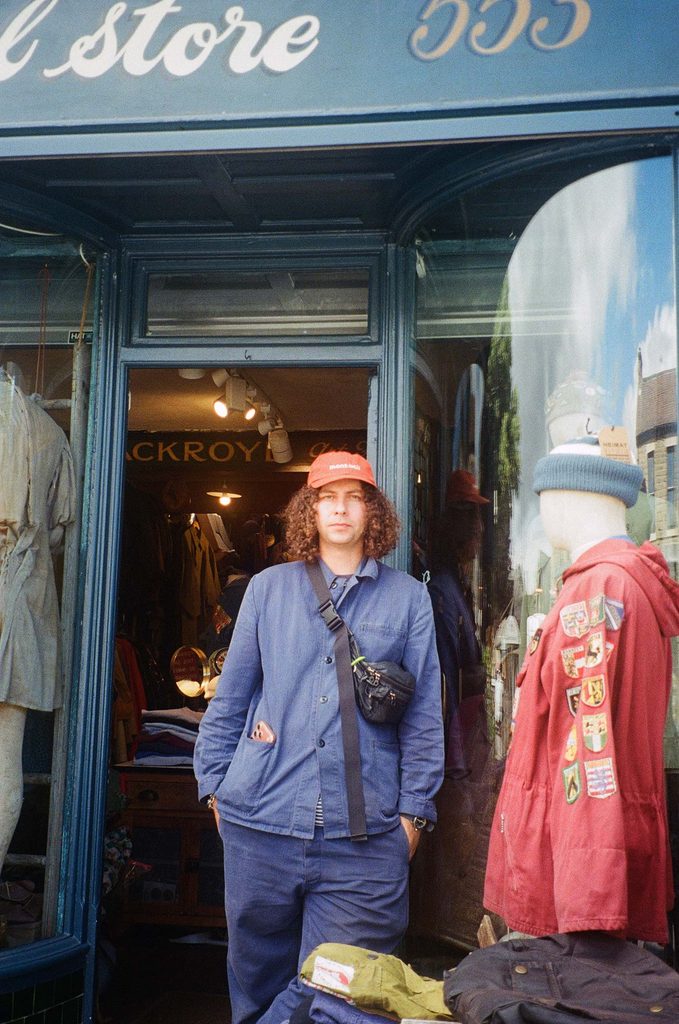
Part shop-keeper, part historian, Jojo Elgarice has spent the last 13 years scouring the globe in search of true vintage gold. With a strong focus on the four pillars of functional clothing; military, workwear, outdoor gear and sportswear, his shop on Sheffield’s Ecclesall Road is the kind of place you’re just as likely to find a customised Vietnam-era jungle jacket as a pristine pair of deadstock Nike running shoes.
Going far beyond the usual gear you’d expect to find at a vintage shop, Rag Parade has become a bit of an institution for those looking for clothing with a story to tell—with every hand-sewn patch or ripped knee only added to the charm.
Keen for a rummage through those rails, we wandered down the road to catch up with the man himself—delving deep on his love of the hunt and why classic functional clothing never fades away…
How did you get into selling old clothes in the first place—you’ve been doing it for a while now haven’t you?
I grew up skateboarding, so I would sell my old t-shirts at the skatepark. Even back when I was eleven or twelve, I remember I used to sell Tech-Decks at school. And my mum is an antique dealer, so she would come back from the car boot sales with Maharishi gear and Evisu jeans for me and my brother. I was always wearing second-hand stuff, without really knowing it was second-hand. At the time it was kind of embarrassing that it was second-hand.
You’re a similar age to me—and thinking back I remember there was a definite stigma around second-hand stuff at school back then.
Yeah—you wanted to impress. That was sort of the rude-boy era, when you wanted things to be brand new—I remember there’d be these fly guys wandering around with the tags hanging off their clothes, but as I got older I started appreciating clothes that were worn and washed.
When I left school I worked in kitchens as a chef—and at the same time I rented a small rail in a shop—and I was making more money selling clothes off the rail than I was at work. So I thought, “Maybe I can make a crack at this?” So I started buying things and getting obsessive, trying to find more impressive pieces, and then eventually I moved into a small shop above another shop, and then I moved here ten years ago. I was constantly always trying to find better and better pieces—and through that I met people in London and met people in Japan, and it opened up my world.
What were you looking for when you first started out?
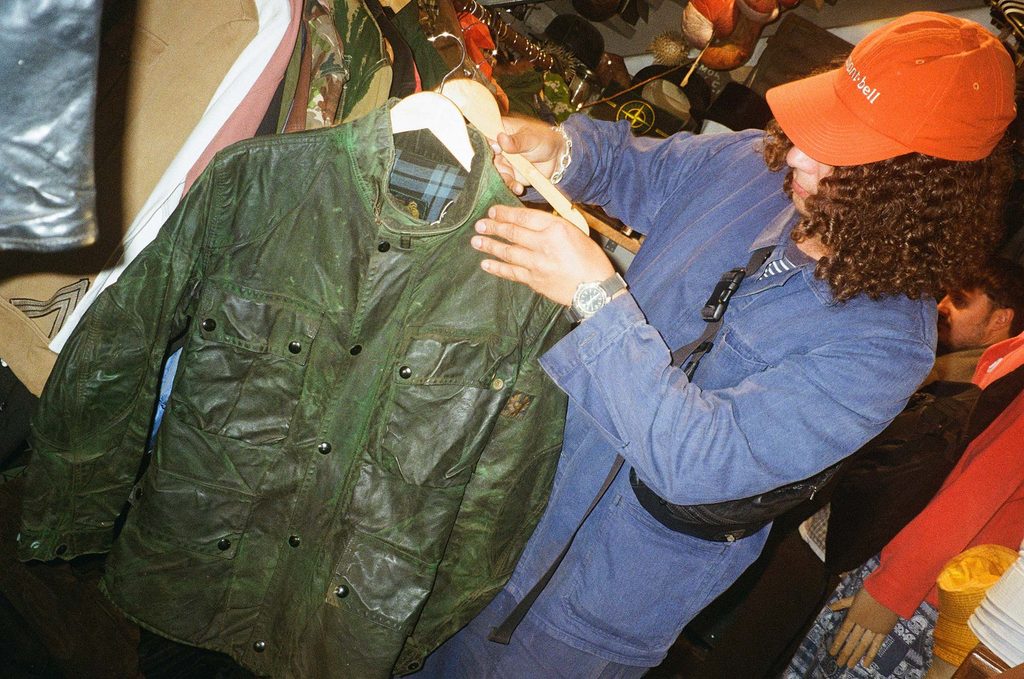
Similar stuff to what I look for now—a lot of old hiking and mountaineering smocks, old Barbours from the 40s and 50s, old Belstaff jackets and back then a lot of handmade shoes—things like Church’s and Trickers and John Lobb. I sold all sorts really—anything I thought was interesting. I’ve always had that ethos—instead of going to big wholesalers I’d handpick things, travelling to places in Europe to find something different. I wanted different stuff, and I was obsessed with learning… I still am to be honest.
I was probably really annoying back then—I’d be out and about buying, and I’d be asking all these questions, “What’s that? What was it made for? Who used it?” At the time I probably seemed a bit of an idiot, but there’s an old saying about that; “Someone who asks a question is a fool for a minute, but the guy who never asks is a fool forever,” or something like that. And that’s kind of true. I’d always ask, and even if the information wasn’t correct, I’d go and read a book or research it.
The problem with the internet now is that it’s made everyone an expert—it’s the best and the worst thing that’s ever happened because it’s made stupid people clever and clever people stupid. People will Google something and then think they know something, even though there’s no actual research behind it.
Especially now when it’s pulling in that weird AI stuff that gets it all wrong.
Yeah—I think the only real way to learn about old clothes is to touch them and handle them. Just to look at something on a computer screen or a flat page in a book is a very different thing to handling it time after time.
I suppose a lot of this stuff is kind of undocumented. I know there are some archive books on military jackets and things like that, but it’s still pretty vague.
Yeah, a lot of it is learned—people have worked it out for themselves. Even when I first started only fifteen years ago, you might have found the odd Japanese magazine that you would try and translate, but generally you were learning from other people.
Is there a charm to that? It’s not like knowing that there’s a specific number of Pokemon cards—it’s a bit of a mystery.
I think so. There’s always something else to spark your interest with it, and there’s always something to surprise you. You might feel like you’ve seen every jacket from back in the day, and then you find something you didn’t even know existed. That search that never ends is kind of what makes it.
What are you searching for now? Are there certain things now that you’re after than maybe ten years ago you’d have never thought about?
Yeah—the thing with me is that I’ve never pigeonholed myself to one era. I like stuff from 100 years ago, and then I like more recent second-hand stuff. In the shop I like to compliment the really old vintage stuff—like for example these really early black moleskin French workjackets—but then I’d present them with someone more modern and contemporary. I like to find things in fabrics that are quite wearable—like cotton rather than heavy wool that’s itchy.
There’s a mixture of old and new—I’ll stock Stone Island or CP Company or Helmut Lang—this stuff that I’d call modern from the 80s and onwards—and I’ll have it next to this hardcore militaria and workwear and old sportswear.
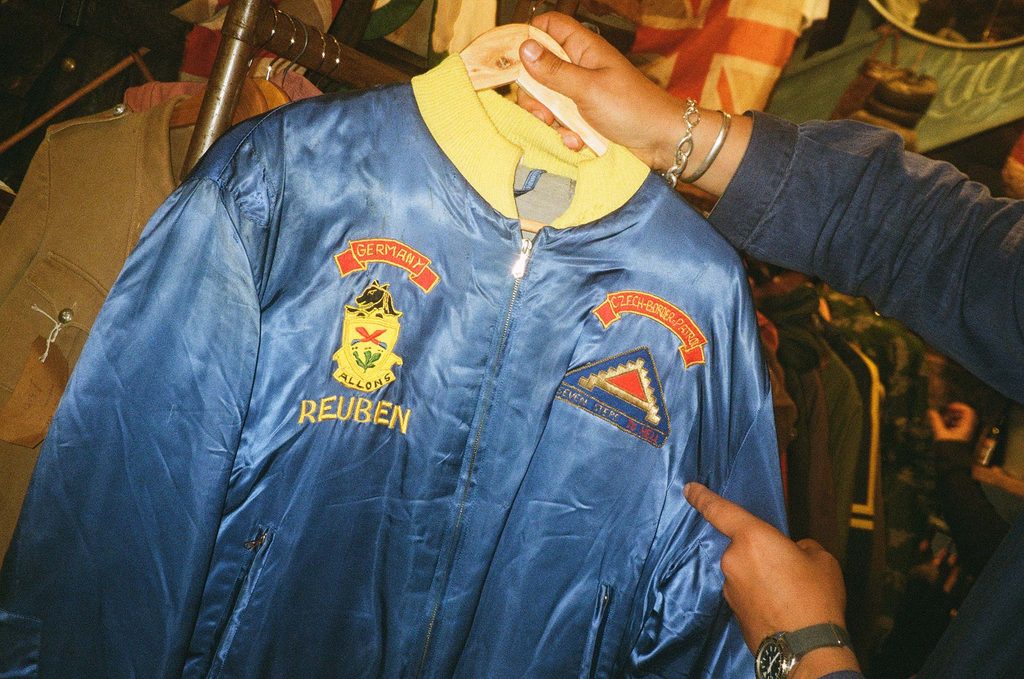
How important is it to have the mix? I know some places focus on specific themes or eras or brands, but you cover a wide span.
Yeah, because I personally don’t really like it when people wear the same stuff head-to-toe—I like it when people mix it up a little with a bit of old and a bit of new. Like if someone’s wearing head-to-toe Victorian gear, they look like they’ve stepped straight out of a photograph—it’s not the best image. And it’s the same if someone’s in all brand new shiny gear—that can look naff too. And also everyone’s a different shape or size. On a really skinny tall guy, a Levi’s Type II jacket might look great, but on someone who’s shorter and larger, it might not look as good. You have to dress to what works for you—everyone has their own vibe going on.
And also, the really old stuff—it’s impossible to find it. If you spend your life looking for one niche thing, it’s really hard to make a business out of it and have stuff to sell day-to-day. So having these more modern bits from the 80s and onwards compliments this older stuff really well. Not everyone is looking for some super-rare military jacket or some niche thing a French peasant wore!
Since you’ve started this, do you think people have more of an understanding of vintage clothing? It feels slightly less niche than it was a decade or so ago.
Yeah—there’s more people doing it, which definitely helps, with more young people opening shops and stuff. But it can take a long time for some of these things to come back around again. When I first started selling French workwear it was really popular—I think people in England were probably responsible for making it cool. The French weren’t really interested in it—we’d buy it super cheap in France and then sell it to guys in London and Japan. And it took a while for the French to understand it themselves and understand the value more. I’ve always quietly sold it, but it’s strange how things can go off the boil for a while, and then suddenly come back around again.
Why do you think that is?
There’s trends within this second hand stuff. My friend who’s been doing this a lot longer than me was telling me how in the 90s, denim like rare early Levi’s was really expensive. And that went off the boil, and now it’s right back up again with things more expensive than ever.
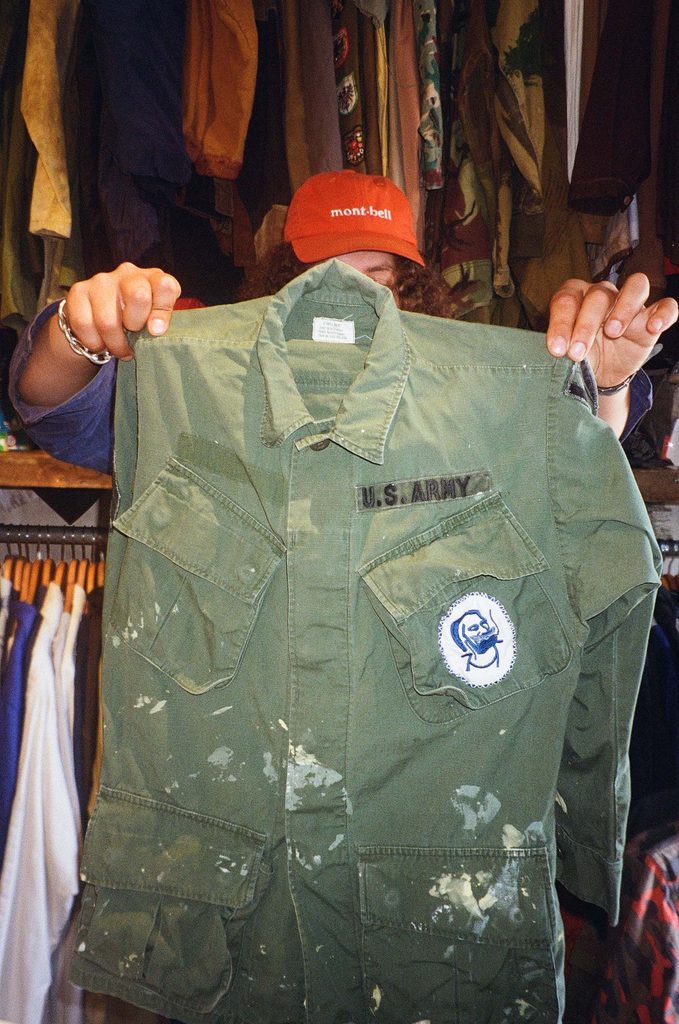
Although there are these trends and maybe certain things like the width of trousers will ebb and flow, it feels like militaria or workwear or vintage outdoor gear are always present.
I think those things transcend trends. They’re so utilitarian and basic that they’re never really in or out—they’re just there in the background. If you’ve got a shop selling second-hand stuff and you’re constantly following what’s popular, you’re always behind. But if you’re doing your own thing, you’re ahead of the curve—you’re just floating on your own path. And that’s hardcore.
If I see something I think is nice, I’ll stockpile loads of them—just sitting and waiting, maybe just selling the odd one but knowing they’re going to come good. But sometimes you get it wrong—and that’s an important thing—understanding when to take the loss. We live in a society where everyone wants to win on everything, but actually taking a loss every now and again isn’t a bad thing—it’s quite therapeutic actually.
Maybe it’s good to know things can go wrong and it’s not the end of the world. What hasn’t worked?
I’ve bought all sorts of mad shit over the years! But then again there’s always someone for everything—it’s just knowing the right people and how to place things.
I suppose there’s a world-wide audience now. 50 years ago you’d just be relying on who walked down the street, but now you can theoretically reach anyone who is into this stuff.
The other day was a good example of that. The first three customers in the shop—one guy had driven down from Norfolk, one guy was from Hull and one was from Huddersfield. I’m not saying those places are particularly far away, but it’s quite nice that people will travel to find this stuff.
As the internet makes it easier and easier to get most things, has that only heightened the audience for the more niche stuff out there—the stuff you can’t just find on Vinted in two minutes?
Everyone wants something unique or different, don’t they? Back in the day you’d see someone wearing a certain thing and think, “Oh, he must have gone to New York for that hat,” but now you can see a kid walking past wearing the maddest shit ever, and you’re not even that surprised. Being a turbo-geek like I am, when I see someone wearing something really special like a ‘50s Burberry coat, I really notice it.
I do think the longer you’ve been doing it, the harder it gets to scratch the itch—that feeling you get in your chest when you’re so excited that you’ve found a certain jacket—that gets a lot harder to get. Reaching that again is really difficult—but eventually you will find something that’s amazing.
Do you remember the first time you felt that?
I always remember finding a ‘50s Barbour. Barbours all have different labels in—I’d been looking for Barbour International jackets, the classic four-pocket motorcycle jacket. Now it’s got three crests, then you get the 90s ones which were made in England, then you’ve got the older ones with two crests, and then one crest—then pre-Royal Appointment they had a yellow label, and before that there was a white label. There are all these different types, and I remember first finding one from the ‘50s and being like, ‘Wow!”
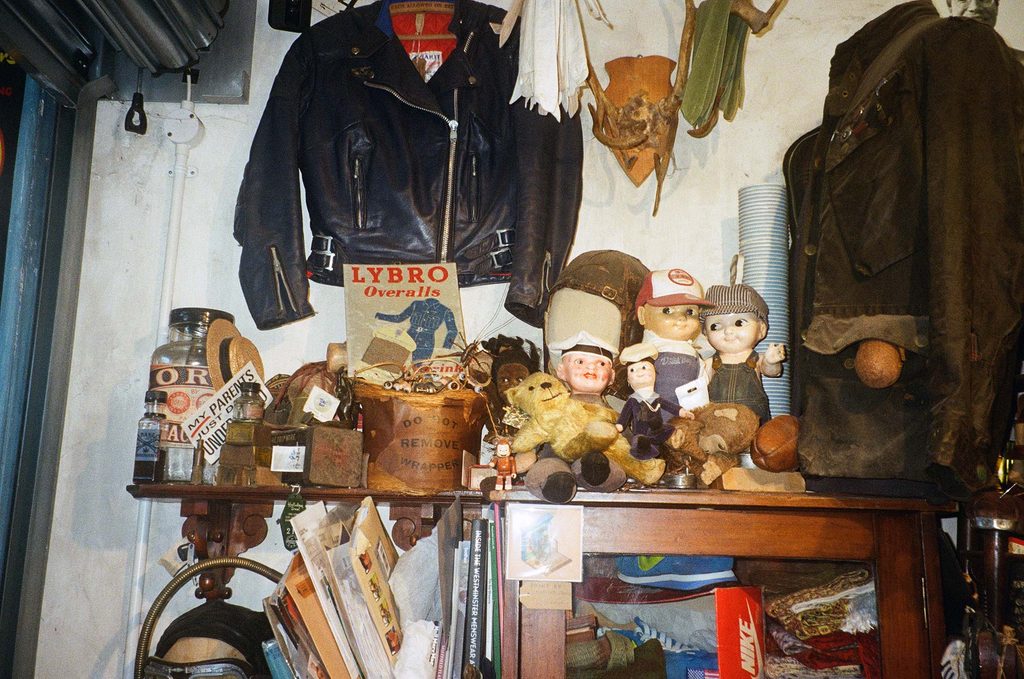
A lot of vintage shops just live online, but just being in here for the last hour you’ve had countless conversations with different people. How important is it to have a real shop and not just be holed up in some unit somewhere?
In a shop you get a 100% hit-rate of people who are satisfied with what they’ve got. But online you’re just another returns-handler. When everything is one-off, it’s so much work just to list one item. When you’re selling new stock, and you’ve got ten of every item, it’s sort of worth the pain to have a website, but for vintage, I don’t know if the pain is worth the misery of dealing with all that online stuff. And people are much nicer in real life too. Real life is quite nice.
And also, people are so-obsessed with measurements—but things are very specific. A suit jacket is going to be close fitting and tailored to you, a piece of outerwear is going to be a lot bigger, and then a pullover smock is going to be maybe five inches bigger in the chest so you can get it on—and it’s a lot easier to understand that when you’re trying this stuff on in real life.
I’ve definitely bought things in shops that I wouldn’t have thought about if I just saw them online.
And it can work the other way around too. Something can look amazing in a picture, but then when you try it on, it just isn’t for you. It’s the same with colours too—I can put on certain colours and end up looking very poorly. It’s about finding what works for you.
Can you shut this off when you get home? I imagine when you go on holiday it’s hard not to want to look through a market for a while.
Oh, I’ll always have a look. I’m always curious, but I definitely buy less than I ever have now. I went out to a second-hand market this morning, but I didn’t buy anything. There was stuff I could have bought, but now I’m looking for things that are interesting or unusual or something I’ve never seen before.
For me personally, it’s not all about making money. If you wanted to make the maximum amount of money, you wouldn’t be doing it the way I do it—you’d be buying hundreds of the same product, just listing it all online all day with a team of people. But for me, I’d rather have less money and more enjoyment. It’s got to be interesting—the second that I lose interest, I might as well be back in the kitchen chopping onions.
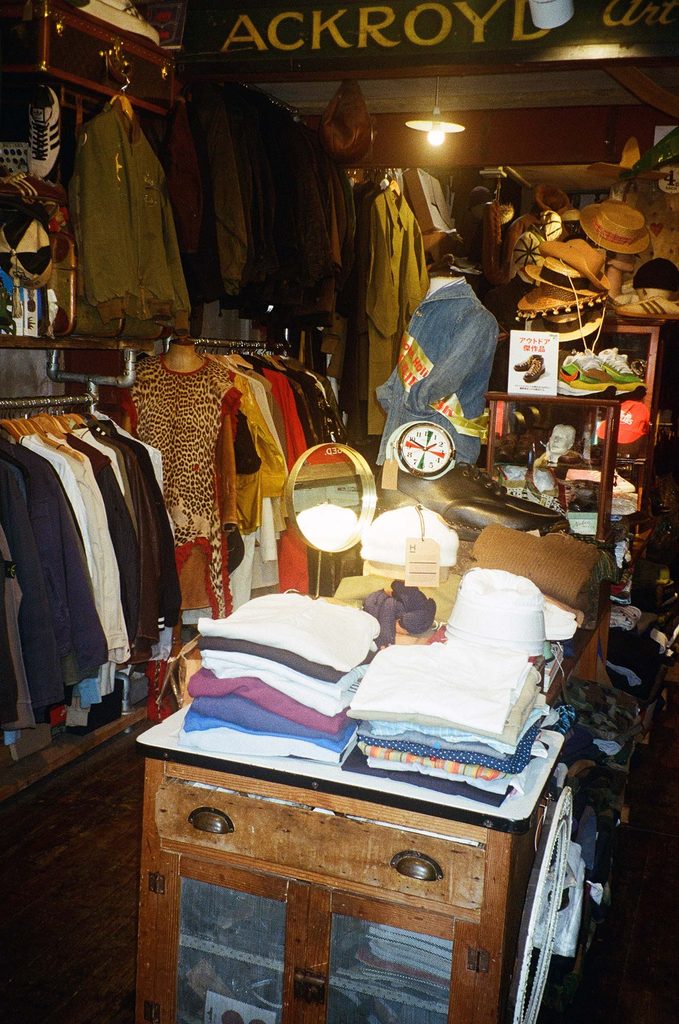
Is it hard to let certain pieces go? I imagine it’s tough selling these things you’ve hunted down for years.
I’ve got a big collection for myself. And then we’ve got an archive of stuff for rentals—for film or TV. There are certain things that I think I might not see again, so I keep them. I’ve also done teaching at different universities over the years—sort of by accident really. I’ll take a selection of pieces from my archive, and we’ll do drawing sessions—looking at the fabrics and the details. With collecting, you’re always looking for that one killer thing, but then when you find it, it’s like, “What’s next?” You have to cure yourself of that, and chill out a bit.
I remember hearing how an old NME music writer in the 80s collected those old Top of the Pops covers records at car boot sales. He spent ages collecting them all and when he finally got the whole collection, he took them outside and threw them in a skip. Sometimes the chase can be better than what you’re chasing.
It’s like completism. Wanting to get everything. I remember Rich from Bags of Flavour saying, “Sometimes, the more you let go, the more that comes back to you.” There are some traders who just want to hoard all the best stuff and not want to sell the best bits—but you’ve got to let some good stuff go. And I think as you get older, you get less obsessive with wanting to keep everything.
Where has the hunt taken you over the years?
All over Europe… Japan… America. One of the maddest ones was being in Japan with my girlfriend. I’d done a pop-up shop in a big department store, and after wrapping that up we took a train out from Osaka into the countryside. We got to this station, and went into this fruit and veg shop to get a drink. I looked up, and there was an old pair of ’85 Jordans there—I got chatting to the guy, and then got into the back-room and the whole shop was full of vintage stuff.
She had to go off on her own shopping trip in the end and I was in there for five hours, before coming out with bag after bag after bag of stuff. It was like a scene out of Dumb and Dumber or something on the way back, with all these calm, civilised Japanese people on the train while we’re getting on arguing, carrying all these bags. Those accidental finds like that are sometimes the best ones.
Is there a sixth sense for this stuff?
Yeah—but sometimes it’s totally random. It’s a bit of an illness sometimes.
But you’ve got an outlet at least—it’s not a folly.
I get to indulge in the world of constantly buying shit… but it’s not all for me.
Searching for vintage clothes for so long now… beyond brands or specifics, what is it that you’re looking for?
I don’t really know until I see it. Some things have just got it, and you don’t really know why. It’s personal to the owner—and I suppose my personal ethos is to buy a few things, and use them until they’re thrashed and worn out.
I think that was where Osti was so clever—he’d make all these amazing things, but everything was aged and washed and dyed in such a way because he never liked the idea of anything looking too new. When you see an old guy who has been wearing something for 30 years, it looks pretty cool.
See more seriously rare vintage garb on Jojo’s highly-educational and endlessly-entertaining Instagram page.